Prescribing information (external link)


SCEMBLIX®▼ (asciminib) is indicated for the treatment of adult patients with Philadelphia chromosome-positive chronic myeloid leukaemia (Ph+ CML) in chronic phase (CP), previously treated with two or more tyrosine kinase inhibitors (TKIs), and without a known T315I mutation.1
Chronic myeloid leukaemia survey on unmet needs (CML SUN)
Results from the real-world CML SUN study demonstrate a clear shift in CML patient priorities after failing 1L therapy, with an increased focus on quality of life (QoL) and tolerability*2
Priorities for 1L CML treatment
For many patients, treatment priorities extend beyond disease control when receiving their 2nd or 3rd TKI.2
Top three treatment priorities:2
Patients (n=356)

Stop or slow disease progression (53%)

Maintain or improve QoL (49%)

Achieve haematologic response (36%)
Prescribing clinicians (n=198)

Maintain or improve QoL (70%)

Achieve major molecular response (MMR) (62%)

Achieve deep molecular response (DMR) (62%)
For patients receiving two or more TKIs, treatment decisions should consider symptoms that impact daily life and reflect changing patient priorities, which may differ from clinician goals2–4
Priorities for 2L CML treatment
Top three treatment priorities:2
Patients (n=359)
Maintain or improve QoL (51%)
Stop or slow disease progression (45%)
Manageable adverse events (AEs) (37%)
Prescribing clinicians (n=198)
Achieve MMR (58%)
Maintain or improve QoL (54%)
Achieve DMR (54%)
Priorities for 3L CML treatment
Prescribing clinicians may have different treatment priorities compared to patients, with a stronger focus on achieving MMR and DMR.2
Top three treatment priorities:2
Patients (n=120)
Maintain or improve QoL (46%)
Manageable AEs (42%)
Stop or slow disease progression (41%)
Prescribing clinicians (n=198)
Maintain or improve QoL (56%)
Manageable AEs (52%)
Achieve DMR (52%)
In the UK analysis of the CML SUN study, patients reported experiencing a high burden of AEs which impacted multiple aspects of their lives†5–9
Considering the chronic nature of TKI use for CML, even mild AEs may negatively impact health-related QoL.10

~8 out of 10
patients felt physically fatigued, emotionally fatigued, or reported reduced ability to exercise5–7

~6 out of 10
patients believed their treatment limited their personal and social lives8

~1 in 2
patients reported needing to take days off work due to AEs9
The importance of AE management in CML is accentuated by the association between treatment AEs, poor treatment adherence and suboptimal outcomes.4,11
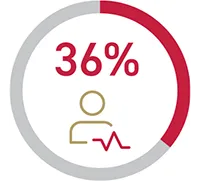
In the UK analysis of the CML SUN study, 36% of patients reported skipping TKI doses to avoid AEs.12
Treatments with a generally tolerable safety profile have the potential to reduce AEs, helping patients with CML to maintain a good QoL and continue to be productive in the workforce13
Find out about the impact of improved QoL on efficacy milestones
For further information, please refer to the Summary of Product Characteristics.
*Results from the CML SUN survey, which assessed the unmet needs of patients with CML (n=361) and their treating clinicians (n=198) in 11 countries.2 Patients ranked their top three most important treatment goals by line of therapy; clinicians selected any goals that they have by line of therapy.2
†Results from the CML SUN UK survey, which assessed the unmet needs of patients (n=44) with CML who had received two or more TKIs and their treating clinicians (n=20).2
1L, first line; 2L, second-line; 3L, third line; AE, adverse event; CML, chronic myeloid leukaemia; CML SUN, chronic myeloid leukaemia survey on unmet needs; CP, chronic phase; DMR, deep molecular response; HCP, healthcare professional; MMR, major molecular response; Ph+ CML, Philadelphia chromosome-positive chronic myeloid leukaemia; QoL, quality of life; TKI, tyrosine kinase inhibitor.
References
SCEMBLIX (asciminib) Summary of Product Characteristics.
Lang F, et al. Haematologica 2025; doi: 10.3324/haematol.2025.287772.
Friends of Cancer Research. Broadening the definition of tolerability in cancer clinical trials to better measure the patient experience. Available at: https://friendsofcancerresearch.org/wp-content/uploads/Comparative-Tolerability-Whitepaper_FINAL.pdf [Accessed January 2026].
DeAngelo DJ. Blood Cancer J 2012;2(10):e95.
Novartis Data on File. Asc004.
Novartis Data on File. Asc005.
Novartis Data on File. Asc006.
Novartis Data on File. Asc007.
Novartis Data on File. Asc12.
Efficace F & Cannella L. Hematology Am Soc Hematol Educ Program 2016;2016:170–179.
Tan B K, et al. Patient Prefer Adherence 2021;15:2563–2575.
Novartis Data on File. Asc11.
Schoenbeck K, et al. Blood 2024;144:7913–7914.

UK | January 2026 | FA-11555285
Adverse events should be reported. Reporting forms and information can be found at www.mhra.gov.uk/yellowcard. Adverse events should also be reported to Novartis online through the pharmacovigilance intake (PVI) tool at www.novartis.com/report, or alternatively email [email protected] or call 01276 698370.