

Hortobagyi GN, et al. Presented at the San Antonio Breast Cancer Symposium 2023, 5–9 December, San Antonio, Texas, USA.
Slamon DJ, et al. Ther Adv Med Oncol. 2023;15:1–16.
Slamon D, et al. LBA500 Presented at the American Society of Clinical Oncology 2023, 2–6 June, Chicago, USA.
Harbeck N, et al. Ann Oncol. 2021;32:1571–1581.
Fasching PA, et al. Oral LBA13. Presented at the European Society for Medical Oncology Congress 2024, 13–17 September, Barcelona, Spain.
Fasching PA, et al. Oral LBA13. Presented at the European Society for Medical Oncology Congress 2024, 13–17 September, Barcelona, Spain.
Harbeck N, et al. Nat Rev Dis Primers. 2019;5:66.
Hortobagyi GN, et al. Oral GS03-03. Presented at the San Antonio Breast Cancer Symposium 2023, 5–9 December, San Antonio, Texas, USA.
OS requires a long follow-up period to detect sufficient events.2 Additional OS follow-up of the NATALEE trial is planned.3
Fasching PA, et al. Oral LBA13. Presented at the European Society for Medical Oncology Congress 2024, 13–17 September, Barcelona, Spain.
Graff SL, et al. Poster PO1-17-07. Presented at the San Antonio Breast Cancer Symposium 2023, 5–9 December, San Antonio, Texas, USA.
Slamon D, et al. Abstract LBA500. Presented at the American Society of Clinical Oncology 2023, 2–6 June, Chicago, USA.
NATALEE included a wide range of patients with
HR+/HER2– eBC1,2
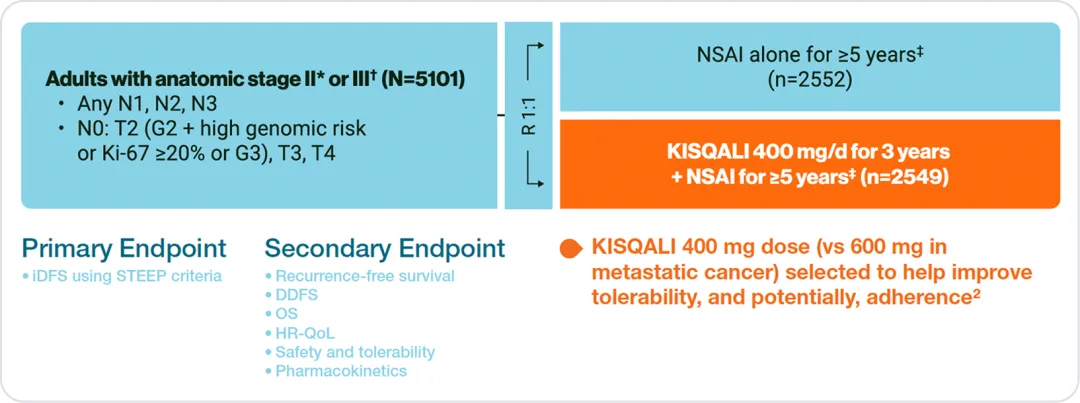
*Anatomic stage IIA inclusive of N0 (with grade 2 and evidence of high risk: Ki-67 ≥20%, Oncotype DX Breast Recurrence Score ≥26, or high risk via genomic risk profiling) or grade 3 and N1, and anatomic stage IIB inclusive of N0 or N1. Enrollment of patients with stage II capped at 40%.2
†Anatomic stage III inclusive of N0, N1, N2, or N3.2
‡Men and premenopausal women also received goserelin.2
NATALEE baseline characteristics3
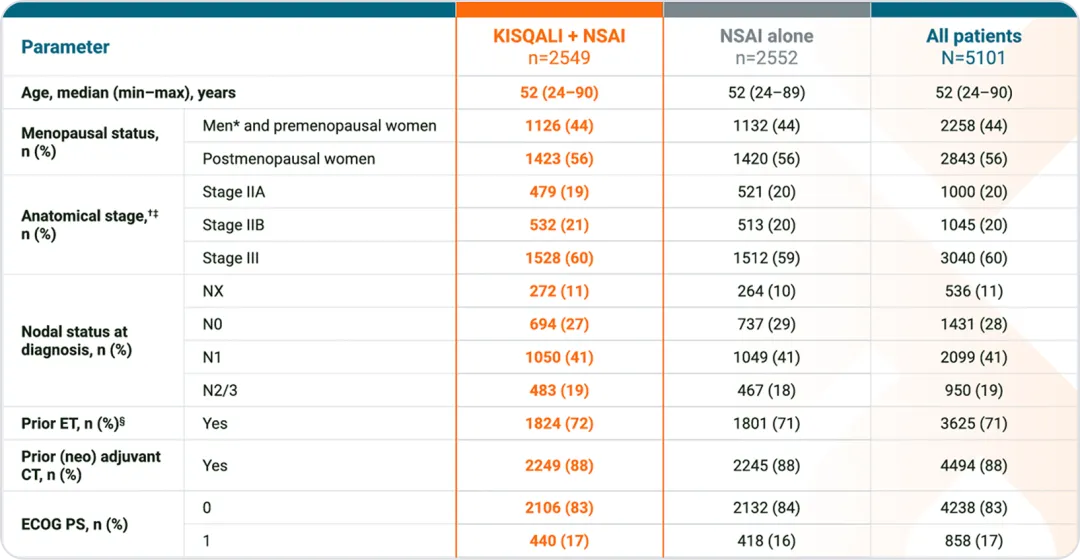
*In the KISQALI® + NSAI arm, there were 11 men (0.4%); in the NSAI alone arm, there were 9 men (0.4%).3
†A total of 14 patients with stage I disease were included: 9 (0.4%) in the KISQALI® + NSAI arm and 5 (0.2%) in the NSAI alone arm.3
‡Stage is derived using TNM from surgery for patients having not received neoadjuvant treatment or as worst stage derived using TNM at diagnosis and TNM from surgery for patients having received neoadjuvant treatment.3
§Prior OFS was received by 670 patients (26.3%) in the KISQALI® + NSAI arm and 620 (24.3%) in the NSAI alone arm.3
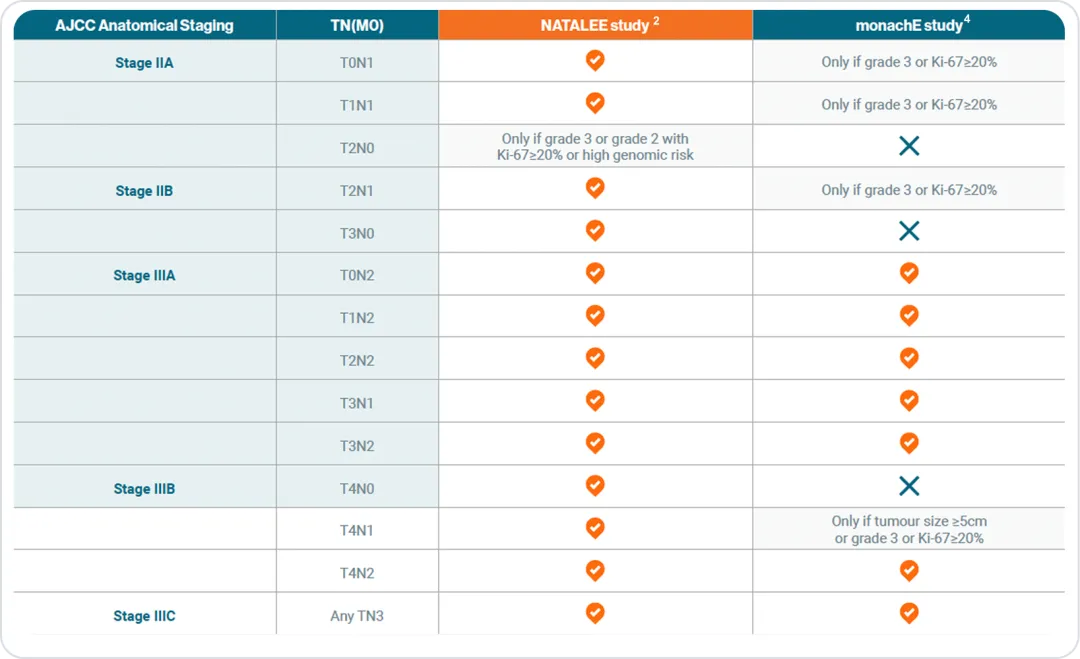
NATALEE population2
NATALEE included an expanded population of HR+ HER2- eBC patients compared to monachE.2 NATALEE included select N0 patients with high-risk features (stage IIA: Grade 2 with Ki-67 ≥20%, Oncotype DX ≥26, or high-risk genomic features, or grade 3; stage IIB/III: Any N0) and patients with any node positive disease (N1-N3), whereas monarchE excluded N0 and allowed only select N1 patients with additional high-risk criteria (grade 3, tumor ≥5 cm, or Ki-67 ≥20).2
AI, aromatase inhibitor; BC, breast cancer; CDK4/6i, cyclin-dependent kinase 4 and 6 inhibitor; CT, chemotherapy; DDFS, distant disease-free survival;
eBC early breast cancer; G, grade; HER2-, human epidermal growth factor receptor 2 negative; HR+, hormone receptor positive; HR-QoL, health-related quality of life; iDFS, invasive disease-free survival; N0, no nodal involvement; N1, 1-3 axillary lymph nodes; N2, 4–9 axillary lymph nodes; N3, ≥10 axillary lymph nodes or collarbone lymph nodes; NSAI, non-steroidal aromatase inhibitor; OS, overall survival; R, randomisation; STEEP; standardised definitions for efficacy endpoints; T, tumour; T2, tumour is more than 2 cm but less than 5 cm; T3, tumour is more than 5 cm; T4, tumour of any size growing into the chest wall or skin, includes inflammatory breast cancer.
References
Invasive disease-free survival
In HR+/HER2– eBC:
At 4 years, KISQALI® + NSAI prevented more than 1 in 4 recurrences vs. NSAI alone¹

In HR+/HER2– eBC:
At 4 years, KISQALI® + NSAI prevented more than 1 in 4 recurrences vs. NSAI alone¹

In HR+/HER2- eBC vs. NSAI alone:
KISQALI® can help you prevent more than 1 in 4 recurrences*1
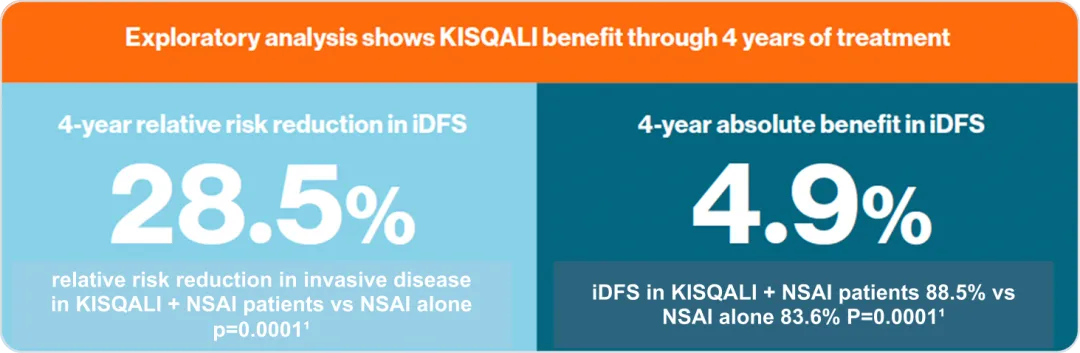
*The NATALEE trial was a multicentre, randomised, open-label, phase III clinical trial of KISQALI® + NSAI vs. NSAI alone in the adjuvant treatment of HR+/HER2- eBC. N=5101. Patients received KISQALI® 400 mg/d + NSAI for 3 years while NSAI continued ≥5 years. Any ET was permitted for ≥1 year prior to randomisation. Men and premenopausal women also received goserelin. Primary endpoint was iDFS.1
CI, confidence interval; eBC, early breast cancer; ET, endocrine therapy; HER2-, human epidermal growth factor receptor 2 negative; HR, hazard ratio;
HR+, hormone receptor positive; iDFS, invasive disease-free survival; NSAI, non-steroidal aromatase inhibitor.
Reference
Distant disease-free survival
In HR+/HER2- eBC vs. NSAI alone:
At 4 years, KISQALI® + NSAI prevented more than 1 in 4 incurable metastatic recurrences*1,2
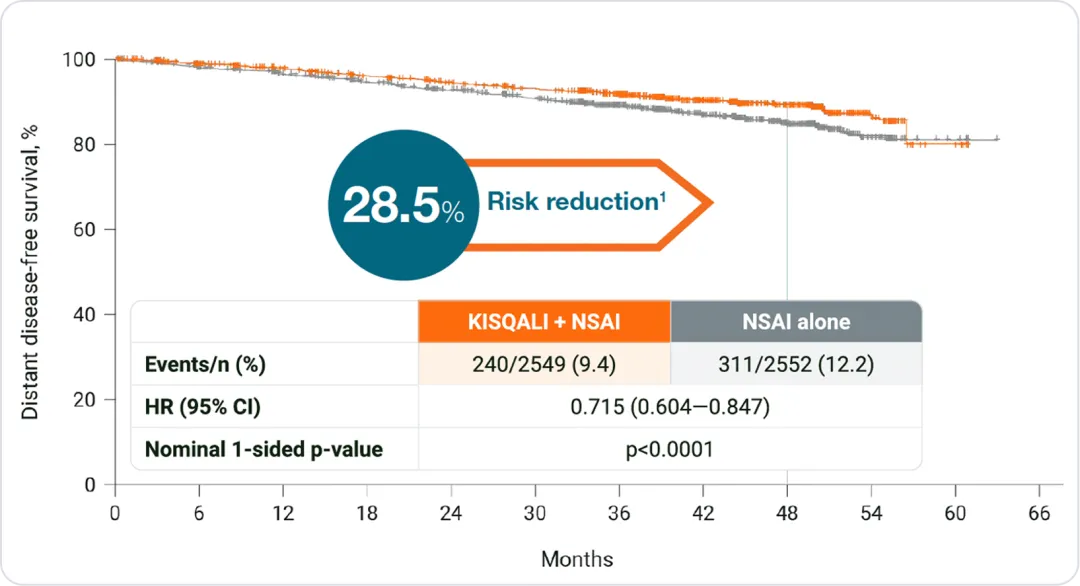
*Distant disease-free survival is defined as the time from date of randomisation to date of first event of distant recurrence, death (any cause), or second primary non-breast invasive cancer, excluding basal and squamous cell carcinomas of the skin.3
CI, confidence interval; DDFS, distant disease-free survival; eBC, early breast cancer; ET, endocrine therapy; HER2-, human epidermal growth factor receptor 2 negative; HR, hazard ratio; HR+, hormone receptor positive; NSAI, non-steroidal aromatase inhibitor
References
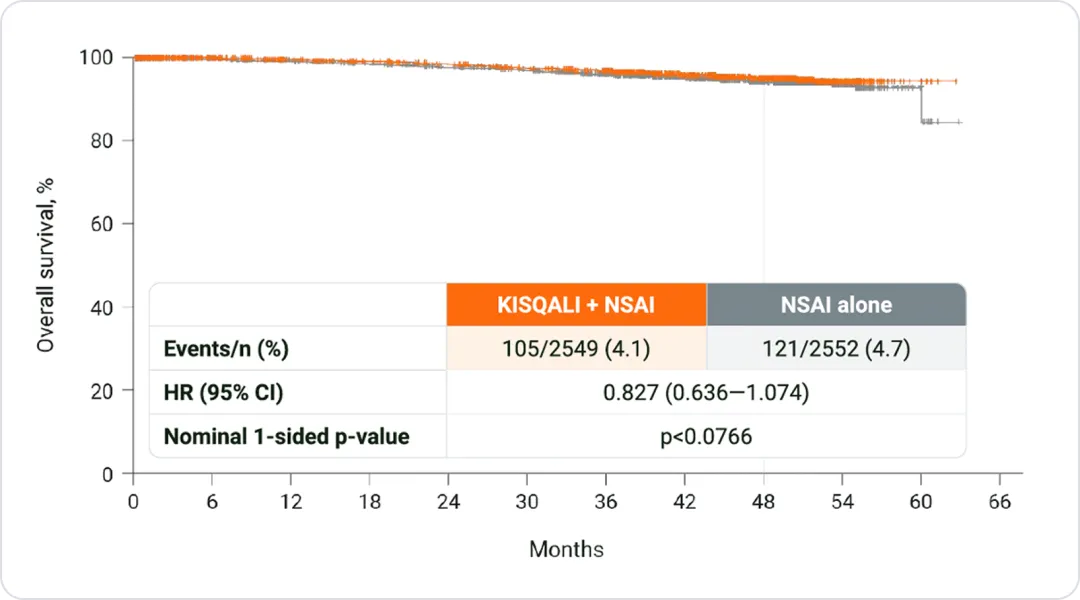
KISQALI® + NSAI showed a positive trend for OS at 4 years*¹
iDFS can act as a reliable surrogate endpoint for OS in HR+/HER2- eBC2
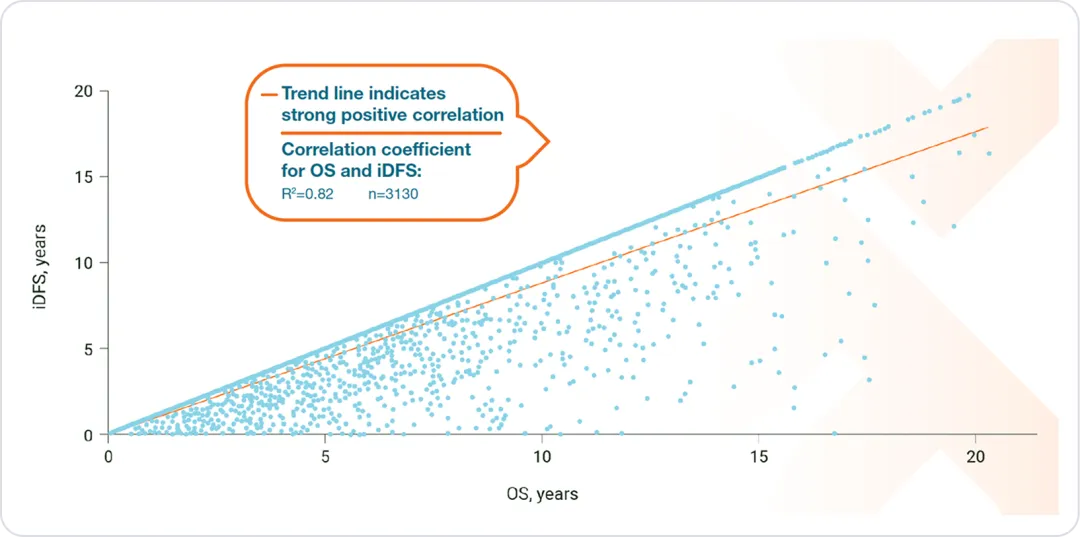
*Median follow-up for OS was 44.3 months. As of April 2024, the OS data remain immature and require longer-term follow-up.1
CI, confidence interval; eBC, early breast cancer; HER2-, human epidermal growth factor receptor 2 negative; HR+, hormone receptor positive; HR, hazard ratio; iDFS, invasive disease-free survival; NSAI, non-steroidal aromatase inhibitor; OS, overall survival; R2, coefficient of determination.
References
KISQALI® NSS - UAE
KISQALI® NSS - UAE